
Why Turning Waste Into Power Is the Future of Sustainable Data Centres
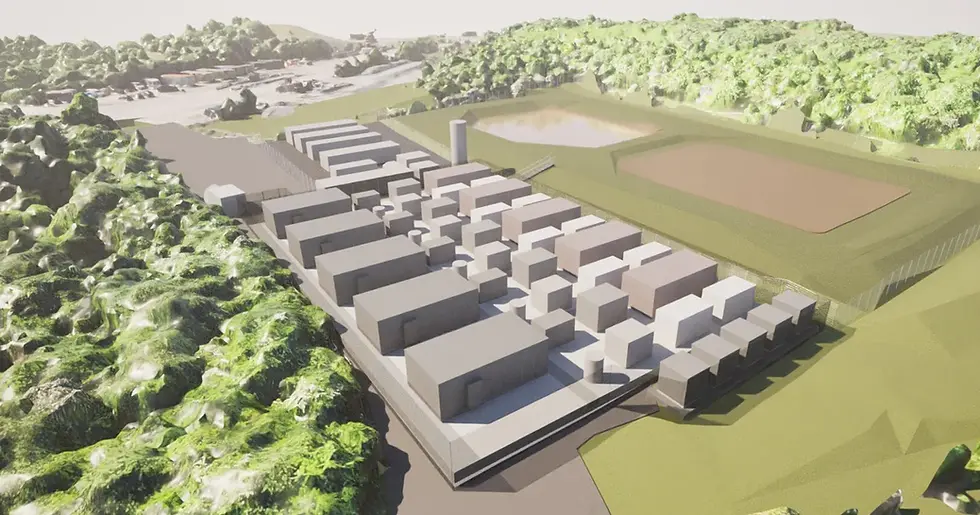
How landfill gas is reshaping the UK’s digital infrastructure — and why it matters for Robyn Ltd
Data centres are the beating heart of modern digital infrastructure powering AI, cloud services, HPC workloads, and the compute‑heavy environments businesses now rely on. But they’re also energy‑hungry. As demand for compute accelerates, the industry faces a critical challenge: how do we power data centres sustainably, affordably, and reliably?
One answer is already live in Derbyshire.
Robyn’s client site near Chesterfield is demonstrating how burning captured landfill gas to generate electricity can power modular data centres ,turning decades‑old waste into clean, usable energy for high‑performance computing.
This model isn’t just innovative. It’s a blueprint for how the UK can decentralise compute, reduce carbon impact, and unlock new value from brownfield land.
Below, we break down why waste‑to‑energy data centres matter, how the technology works, and what it means for organisations like Robyn Ltd operating in the HPC, risk, and technical project delivery sectors.
♻️ 1. Waste‑to‑Energy Turns a Liability Into an Asset
Landfill sites naturally produce methane — a greenhouse gas 84× more potent than CO₂ over a 20‑year period. UK regulations already require operators to capture this gas, and many sites convert it into electricity for the grid.
The clients Chesterfield site takes this a step further:
Captured landfill gas is burned to generate electricity
That electricity directly powers HPE ModPod data centre modules
The site becomes a self‑sustaining compute hub built on land that previously had no economic value
This transforms waste into a long‑term renewable energy source ,one that can support AI, HPC, and enterprise workloads without drawing heavily from the national grid.
⚡ 2. Reliable, Localised Power for High‑Demand Compute
The client operates 44 waste‑energy sites across the UK, each generating around 5 MW of power.
Instead of selling this electricity back to the grid at ~5.6p/kWh, the client now uses it to power on‑site data centres ,dramatically reducing operational costs and shielding compute operations from grid volatility.
Benefits include:
Stable, predictable power supply Ideal for HPC clusters, GPU farms, and latency‑sensitive workloads.
Reduced transmission losses Energy is generated and consumed on the same site.
Lower cost per kWh Making AI and HPC workloads more commercially viable.
For companies like Robyn Ltd, which operate in high‑stakes technical environments, this model offers a compelling alternative to traditional colocation or hyperscale facilities.
🌍 3. Dramatically Lower Carbon Footprint
By using landfill gas that would otherwise be flared or released, waste‑powered data centres:
Reduce methane emissions
Reduce reliance on fossil‑fuel‑powered grid electricity
Enable brownfield regeneration without new environmental impact
The client’s Chesterfield site is part of a wider plan to create a “national grid for AI” powered by renewable energy from landfill gas and solar.
This aligns with the UK’s sustainability goals and provides a credible pathway for organisations seeking low‑carbon compute.
🧱 4. Faster Deployment Through Modular Data Centre Design
The client’s Chesterfield site uses HPE ModPods. Modular, container‑sized data centre units that can be deployed in 7–8 months, compared to ~3 years for a traditional build.
Key advantages:
Rapid deployment of GPU clusters
Scalable “Lego‑style” expansion
Direct liquid cooling for efficiency
Heat reuse potential (water exits at ~45°C)
For project managers, risk leaders, and technical delivery specialists, this speed of deployment reduces project risk, accelerates ROI, and enables flexible scaling.
🏭 5. Regenerating Brownfield Land and Local Communities
This model doesn’t just deliver compute ,it revitalises unused industrial land.
Their strategy includes:
Converting former landfill and steelworks sites into data centre campuses
Building community infrastructure (training centres, sports facilities)
Creating local jobs in engineering, energy, and digital technology
This approach aligns with Robyn Ltd’s values around sustainable development, community benefit, and responsible technical leadership.
🔌 6. A Blueprint for the Future of UK Data Centre Power
Waste‑to‑energy data centres offer a powerful combination:
Renewable energy
Local generation
Lower costs
Reduced carbon impact
Faster deployment
Scalable compute capacity
As AI, HPC, and data‑driven industries continue to grow, the UK will need new models of energy‑efficient compute infrastructure. This Chesterfield site is one of the first ,but it won’t be the last.
For organisations like Robyn Ltd, this shift opens opportunities in:
HPC project delivery
Risk and resilience planning
Energy‑aware data centre design
Sustainable infrastructure consulting
Technical programme management for modular deployments

Turning Waste Into Power Is No Longer Theory ,It’s Happening Now
The Chesterfield landfill‑powered data centre proves that the future of compute doesn’t have to rely on traditional grid infrastructure. By capturing landfill gas and converting it into electricity, companies can build cleaner, cheaper, more resilient data centres on land that would otherwise sit unused.
This is not just an energy solution ,it’s a transformation of how the UK thinks about digital infrastructure.
Robyn Ltd stands ready to support organisations navigating this new landscape, delivering expertise across HPC, risk, technical programme management, and sustainable project delivery.


Comments